KS3
Electricity
This power plays a big part in our world. We use it daily to run our favourite devices, keep the lights on and now even to charge our cars.
Learn about this dangerous but vital creation.
What is electricity?
Electricity is a form of energy we can produce using a generator, also occurring naturally in the form of lightning. It's the flow of charged particles called electrons. Electron is a Greek word and is where the word electricity originated. There are two types of electricity, alternating current (AC) and direct current (DC).
Current
Current is the flow of electrons going through a wire each second. The greater the current the greater the number of electrons flowing per second. Imagine them as little cars driving on a road.

Current
The number of cars passing a point in one second is the current. If lots of cars go by in one second, we have a strong current, and if just a few go by, we have a weak current. So, electrical current is all about how many electrons are moving through a wire, just like counting cars on a road. Electric current is measured in amperes (amps) or its symbol is A. The equipment used to test current is called an ammeter.
Ammeters
We can use these currents to turn on lightbulbs and when we want to operate technology and devices like our phones. For our current to flow, we need an energy source like a battery to push the electrons around. Our current also needs an unbroken path in order to flow as a circuit.
Ammeters
An ammeter is always connected in series to the other component to test the flow of electrons through itself. It can also be placed anywhere in the circuit. When electrons are free to move in metals, they conduct electricity. An electric current is when we push electrons around a circuit.
Potential Difference (p.d)
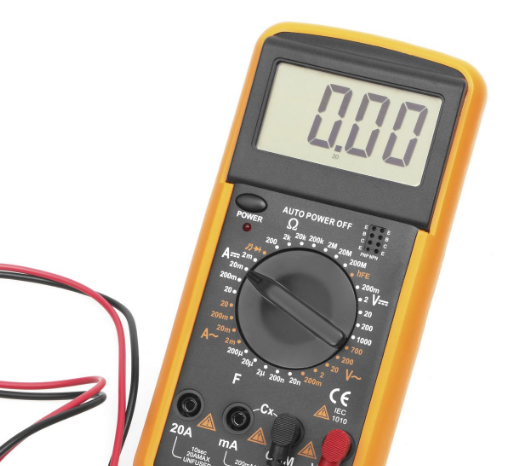
A voltmeter is used to measure the potential difference between two points of a circuit.The unit for potential difference is Volts with its symbol being a V. An AA battery has a potential difference of 1.5v. Voltmeters are always connected up in parallel to the component/components that are being tested.
Potential Difference (p.d)
Potential difference is a measurement taken when looking at the amount of energy that is transferred between two points in a circuit or a component. Imagine electricity is like a waterfall. Potential difference is like the height of the waterfall. The higher the waterfall, the more powerful the water at the bottom. Similarly, in electricity, potential difference measures how much “push” the electricity has. The higher the potential difference, the more electricity can flow, just like a bigger waterfall has more water flowing down. So, potential difference is like the power or force that makes electricity flow through wires.

Circuits
When we create a circuit, we make a continuous path or loop of electric current. We can use devices like a switch or components like a lightbulbs in our circuit.
Voltmeter
Volt meters are instruments used to measure voltage in an electrical circuit. They can measure potential difference.
Variable Resistor
This kind of resistor allows the resistance to be changed whilst keeping the current constant.
Switch
A switch in an electrical circuit will interrupt the flow of current when disconnected and allow flow when connected.
Cell
Cells provide energy allowing electrons to move away from the positive ions. Several cells can be connected together to form a battery.
Resistor
Resistors are components that create resistance in a flow of electrical current. They create a voltage drop for protection in a circuit.
Ammeter
An ammeters is an instrument and it's function is to measure both direct current (DC) and alternating current (AC) in amperes.
Battery
A battery consists of two or more cells connected together. The provide the energy or the push.
Lamp
Lamps (light bulbs) produce light when a current flows through them.
Motor
Motors are used in many devices to provide a spinning motion. An example of this would be an electric whisk or a blender.
Series circuits
When we connect up a series circuit all components involved (other than a voltmeter) are connected up in one single loop.
In a series circuit if a switch is turned off or a component breaks the current stops flowing as the loop is no longer complete.
Current
The ammeter can be added (in series) in any location, as the current will remain the same everywhere.As resistance increases, the current decreases across the whole circuit.
The lamp(s) will get dimmer when more lamps are added in a series circuit due to a higher resistance.
Potential Difference
In a series circuit, the potential difference of a battery (or cell) is divided between the components. If the resistance of each component is the same, then the p.d. is divided evenly. If the components don't have the same resistance, then the potential difference is not divided equally.
Parallel circuits
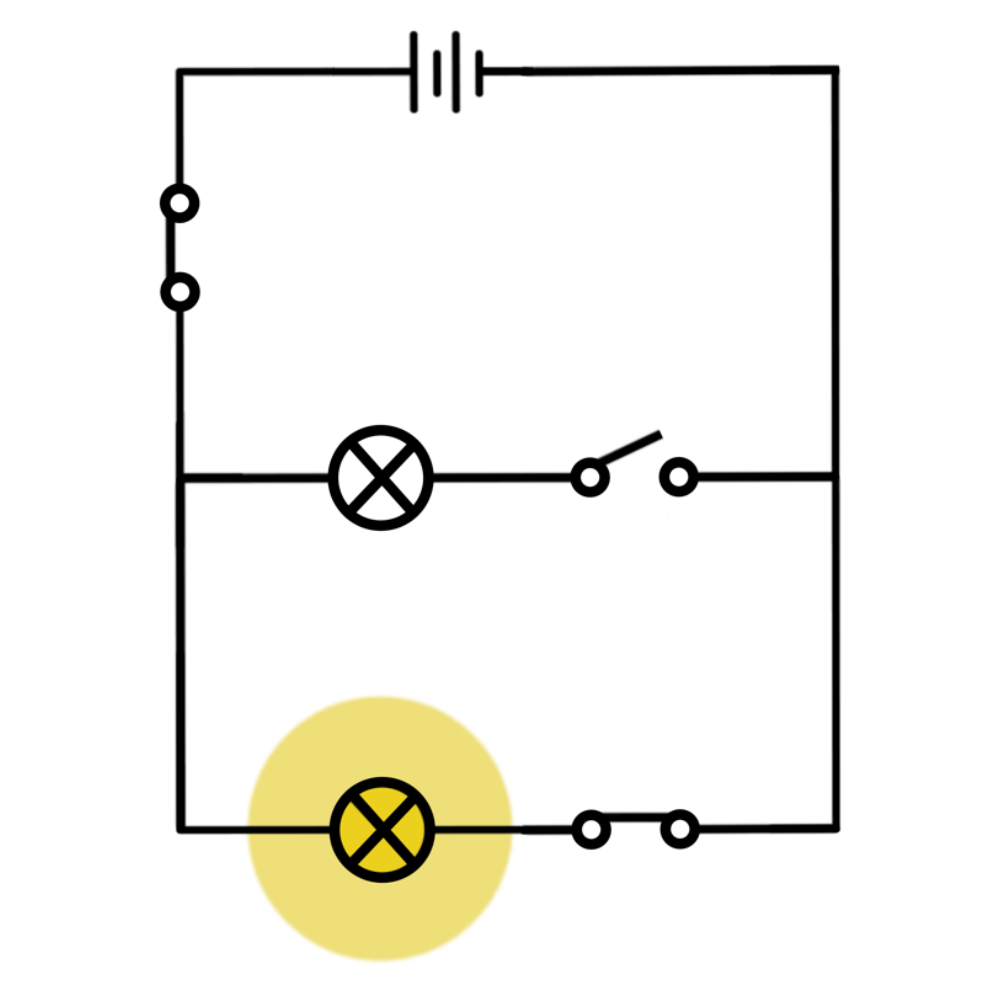
When we connect up a parallel circuit the components can be found on multiple branches (loops). Current can flow down each pathway and if a loop breaks the other loops are not affected.
Lights and plug sockets in homes (and businesses) are normally found on parallel circuits to each other leading back to the fuse panel.
When adding a switch to the circuit we can either shut down all lights by putting switch next to power source, or on each individual branch allowing some lights to be on, whilst others are off. We can refer to these as open or closed switches.
In a parallel circuit current is divided between the branches. Ammeters can be placed next to the battery (or cell), to know the total current, and on each branch.
More current will flow along the branch that has the lowest resistance.
The potential difference in a parallel circuit is the same throughout. This means each branch will have the same potential difference that the battery (or cell) has. All lamps on a parallel circuit will have the same brightness. If more branches are added the brightness of the lamps will not change.
Resistance
Resistance in a wire or component occurs when electrons collide with ions. When the flow of current is difficult the resistance is higher.
Ohms is the unit for resistance. The symbol for resistance is Ω (greek letter omega).
Every component in a circuit has resistance even the wires.
Resistance in series
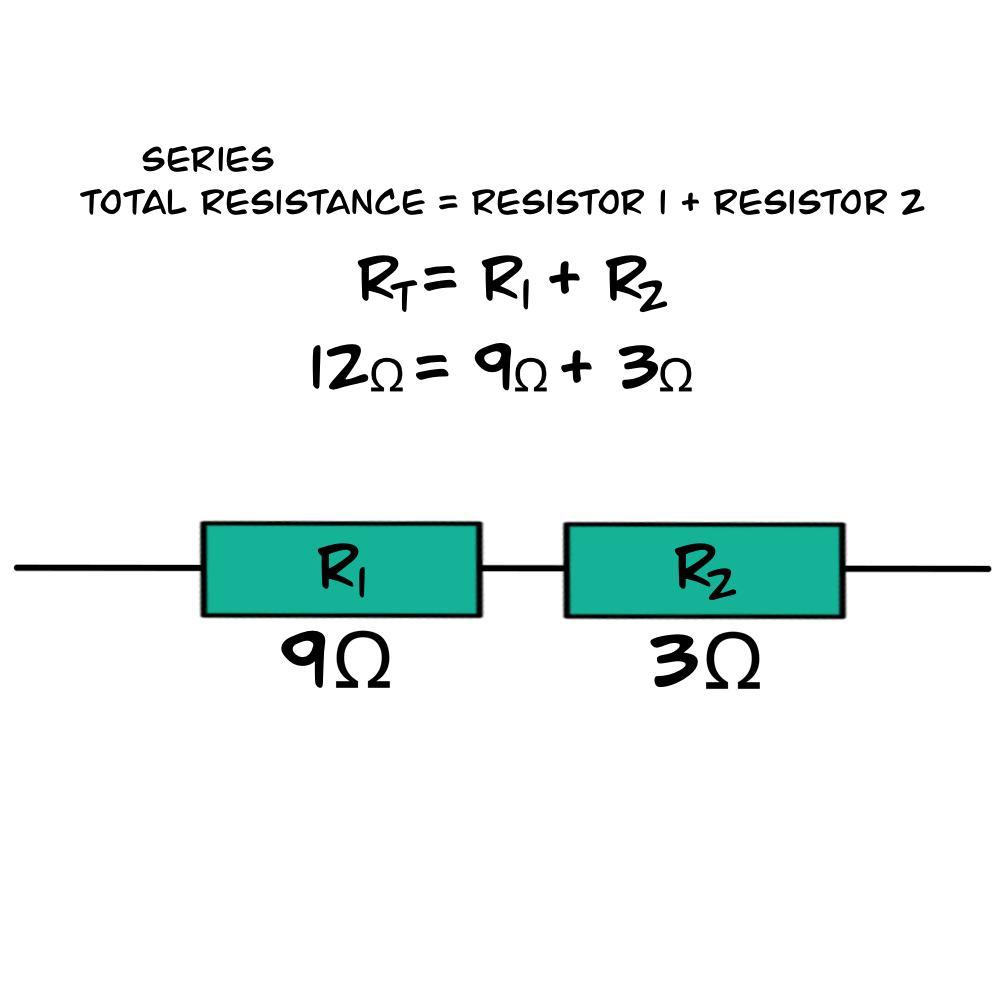
The total resistance of a series circuit is directly affected by the number of components found in the circuit. More components equals a higher resistance.
In a series circuit the total resistance equals the resistance found in all components added together.
Resistance in parallel.
In a parallel circuit the more components (and branches) there are the lower the resistance is. This causes more current to flow through the battery (or cell).
Calculating resistance.
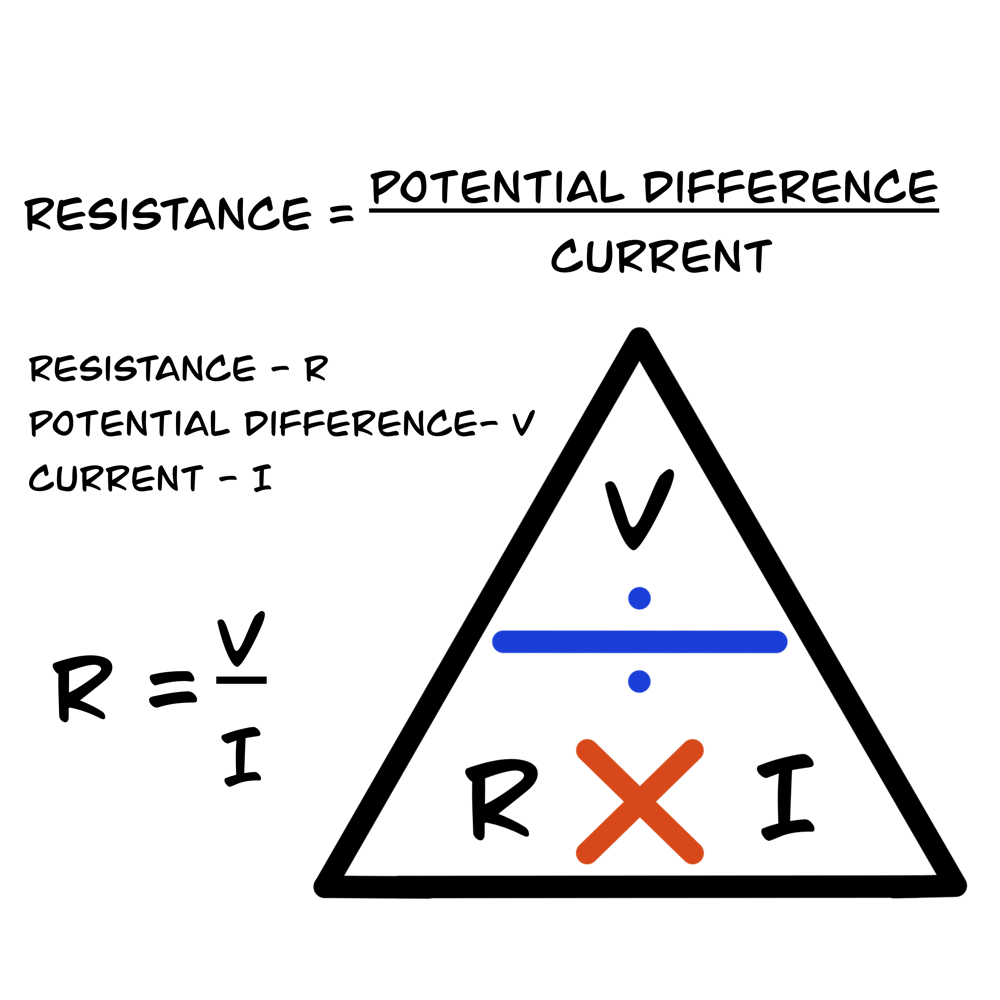
When calculating resistance we divide potential difference by current.
We can use this triangle to work out resistance. By covering up the R we can only see V ÷ I.
This also helps when we want to calculate potential difference or current as we can follow the same technique.
Worked example.
A cell has the potential difference of 9V, the current flowing around the circuit is 3 amps. What is the resistance found in the circuit?
Resistance = potential difference ÷ current
Resistance = 9V ÷ 3A
Resistance = 3Ω
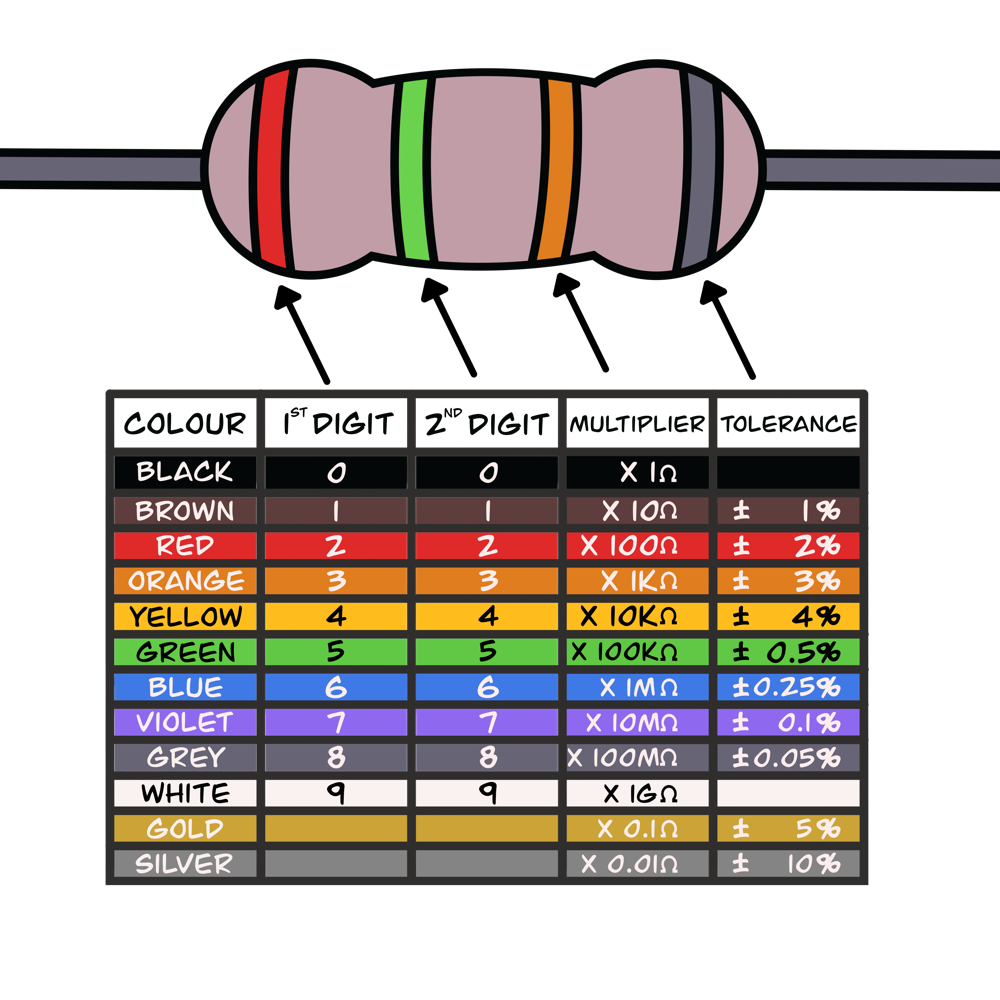
Resistor colour code.
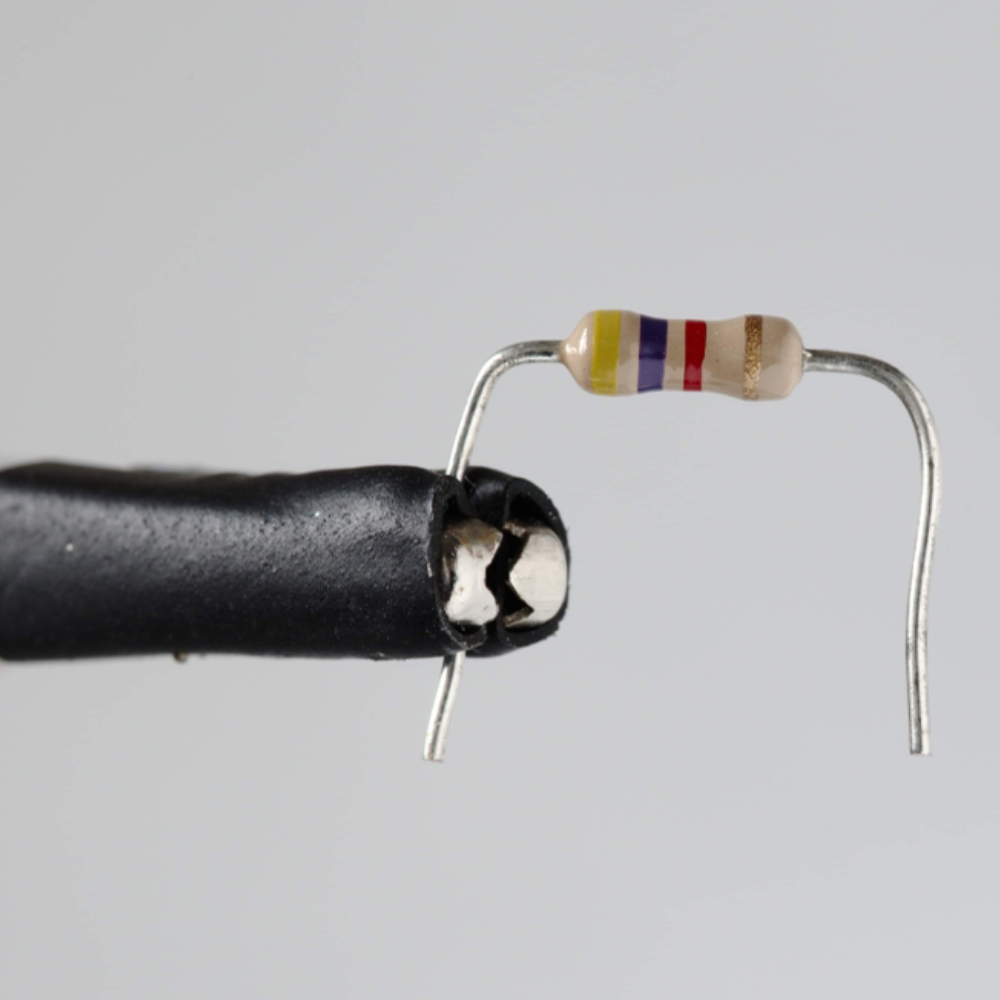
Resistors typically have colour codes that indicate their resistance value and tolerance. The colour bands on a resistor are read from left to right. Here’s what each band represents: 1. The first band indicates the first digit of the resistance value. 2. The second band represents the second digit of the resistance value. 3. The third band is a multiplier that determines the power of 10 by which the first two digits should be multiplied. 4. The fourth band (if present) is the tolerance band, which shows the allowable percentage variation from the nominal resistance value.
Conducting and insulating components
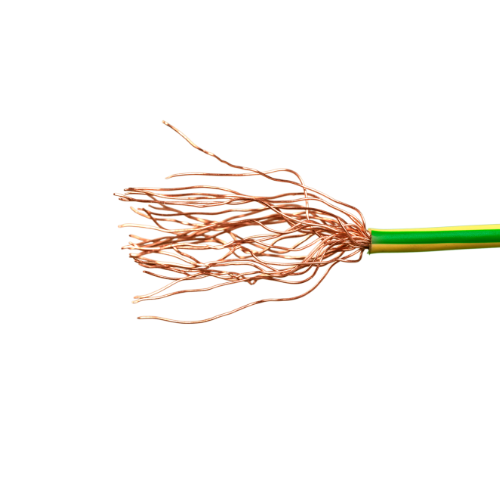
Not everything can conduct electricity. Materials like glass, plastic, rubber and wood don't allow electrons to move freely, making them poor conductors. We can call these materials insulators. It is perfect for transporting electrical currents safely. Think of your phone charger. The wires carrying the electrical current are covered.
Conducting components
Conductors are objects, substances and materials that allow the flow of electricity freely through them.
Metals are good conductors because the positive ions are organised in neat rows allowing the negative electrons to flow easily.
The more electrons available the better the conductivity of the metal. For example copper is a great conductor, whereas tin has fewer electrons available so has a higher resistance.
Metals, animals, Earth and even the human body are good conductors.
Below are a few strong conductors of electricity.
Insulating components
Non-metallic objects are not very good at conducting. They make it hard for current to flow through them.
There are some non-metals that are good conductors. Graphite pencils if sharpened at both ends would complete a circuit if you didn't have enough wire.
Static
When two electrical charges have an imbalance, static electricity can occur. These positive and negative charges can build up on an object's surface until they find a way to release.
Structure of an atom
Atoms have a nucleus and orbiting the nucleus there are electrons. If the electrons (negative particles) get enough energy they can be transferred to other objects. In the nucleus there are protons, protons have a positive charge.
For every proton there is an electron, therefore an atom has a neutral charge.
When an atom loses an electron the atom has a positive charge overall as it has lost negativity.
Protons have a greater mass (when compared to electrons) and are located in the nucleus so it is harder for them to move. This is why electricity is the flow of electrons.
Examples of static
When you pull clothes made of synthetic material from a tumble dryer have you heard the crackle of static electricity? What about having clothes stick to you?
Have you ever gotten a shock from a door handle or lift button? What about if you bump into someone after walking around on a carpet?
Have you noticed that dust can be attracted to tv screens?
Experimenting with static
We can have some fun with the effects of static electricity on objects. If you rub a neutral charged balloon on a wooly jumper you will negatively charge it. If you then place the balloon next to a wall, the positive charges (in the wall) will be attracted to your negatively charged balloon. The balloon should then stick to the wall! This is called the polarisation of charge.
Forces from static
An electric field is created when an object becomes charged. Electrostatic forces are non-contact force meaning they act from a distance.
When you rub a balloon on your top and hold it above your head, your hair will stand on end from the static.
This is because of electrostatic forces between the charged objects.
When the objects have opposite charge (positive-negative) they attract,
but if they are the same charge (positive-positive or negative-negative) then they repel.
Van de Graaff
A Van de Graaff generator is an electrostatic generator that is used to accumulate and store electric charge on a large, hollow metal sphere. It was invented by American physicist Robert J. Van de Graaff in the early 20th century.
Van de Graaff
As the motor turns the bottom pulley, the rubber belt moves over it, and a metal brush at the bottom collects electrons from the Earth or another source. These electrons are transferred to the metal sphere, creating a significant electric charge. The charge accumulates on the sphere’s outer surface and is stored there.
Van de Graaff generators are capable of producing extremely high voltages, which can create impressive electrical discharges. They are often used in scientific research, particle accelerators, and educational demonstrations to study and illustrate the principles of electrostatics and high-voltage phenomena.

Dangers of static
Lightning can happen when static electricity builds up in clouds. Lightning is a danger to life.
Another risk of static electricity is when you are in the presence of flammable gas, there could be a spark which would ignite the gas.
Serious and even fatal electric shocks can happen when a person touches a surface that has a high electric charge. This is because the electric would flow through the body.