KS3
Crude Oil & Fuels
Working to find better ways of fueling our planet is very important right now.
Find out about crude oil, where we get fuels from and the green alternatives.
Renewable sources for energy
There are alternative ways we can get energy instead of fossil fuels.
These are often infinite sources depending on how it is acquired or how long it takes to form.
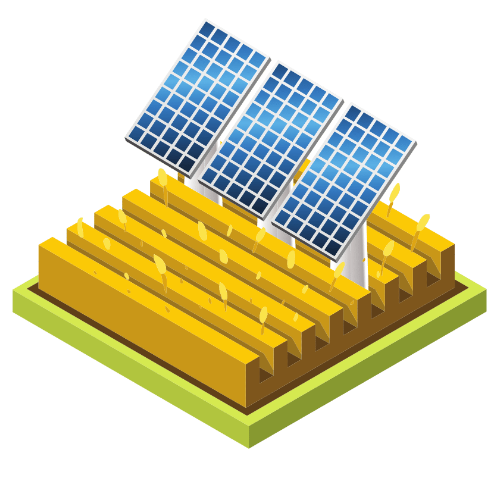
We can get energy from renewable resources such as tidal, wind and solar.
What are the alternatives?
We can burn things like wood, ethanol or charcoal.
Charcoal is similar to coal but it is manufactured instead of occurring naturally.
Charcoal is made by heating wood in a low oxygen environment till there is no water left.
Finite vs infinite
There is a huge demand for energy in our world. To get this energy we can use either finite or infinite resources.
Finite means it has a limited amount and so will run out. We can also refer to finite resources as non-renewable resources.
Infinite means that there isn't a limited amount and so we won't run out. We can also refer to infinite resources as renewable resources.
Fossil fuels are being used up faster than they are being made, which means we need to find alternative ways of getting energy.
What are fossil fuels?
Fossil fuels are the remains of dead organisms from millions of years ago.
There are three fossil fuels, these are crude oil, coal and gas.
Coal is formed from the remains of dead plants such as trees.
Crude oil and gas are formed from the remains of dead marine life such as Algae and Plankton.
All fossil fuels are burned to produce energy for one thing or another, with the burning of these fuels we contribute to global warming.

How do we get fossil fuels?
As stated above coal is formed from dead plants. These dead plants died in swamp lands and were buried under water and dirt. Over millions of years, they were subjected to heat and pressure turning the dead plant life (mainly wood) into coal.
Crude oil and gas were formed by large amounts of Plankton and Algae (or other marine life) dying and being buried under sediment.
This sediment then got buried further, which caused pressure to increase and heat was applied. This turned the sediment into rock.
Some of the rocks were permeable and allowed the crude oil to form underground reservoirs. The rock that wasn't permeable prevented the crude oil from escaping these reservoirs.
What is crude oil?
Crude oil is a naturally occurring thick black substance found in underground reservoirs.
It is made up of a mixture of compounds called hydrocarbons. Hydrocarbons are long chains of hydrogen and carbon atoms chemically bonded together.
These chains can be of different lengths. We can separate these chains into groups called fractions through a process called fractional distillation.
These fractions can then be used for different things, such as petrol and diesel for cars or bitumen for roads.