Skip to content

KS3

Space

The exploration of space is becoming more of a focus.

With new ways to travel into orbit and talks of moving to Mars, now is a great time to learn all about space. 

A day on earth

Every single planet has its own day length, for example, a day on Venus is the same as 243 Earth days.

Half of the day faces away from the Sun and is called nighttime. The other half of the day faces the Sun and is called daytime.

space person floating
space person sat on the moon

365 Days

There are 365 days to an Earth year. An Earth year is how long it takes our planet to travel once around the Sun.

space person sat on a planet

24 Hours

One day last 24 hours. This 24 hour period is how long it takes the Earth to spin once on its axis. 

space person sat on a planet

The seasons of Earth

There is a northern hemisphere and a southern hemisphere. The equator is an invisible line found around the centre of the planet. The equator is the closest part of Earth to the Sun. The Earth is tilted on its axis at an angle of 23.4O.

During the Earth's orbit of the Sun, the Earth's tilt determines which hemisphere is closest to the Sun.

Cycle diagram of the four seasons

4 Seasons

There are four seasons to a year.
These are winter, spring, summer and autumn.

Man surfing

Summer

When the northern hemisphere is tilted towards the Sun, we refer to this as Summer.

Image of a bike on a snowy street

Winter

When the northern hemisphere is having its summer, the southern hemisphere is in Winter as it is further away from the Sun.
space person skateboarding
Illustration of the moon in each stage

Phases of the moon.

The moon that orbits Earth has eight phases. These eight phases are completed within 27.3 days.
After the eight phases the cycle starts all over again with the new moon.

Illustration of the new moon

Phase one is the new moon. It is the closest to the sun.

Illustration of the moon in waxing crescent

Phase two is the waxing crescent.

Illustration of the moon in first quarter

Phase three is the first quarter.

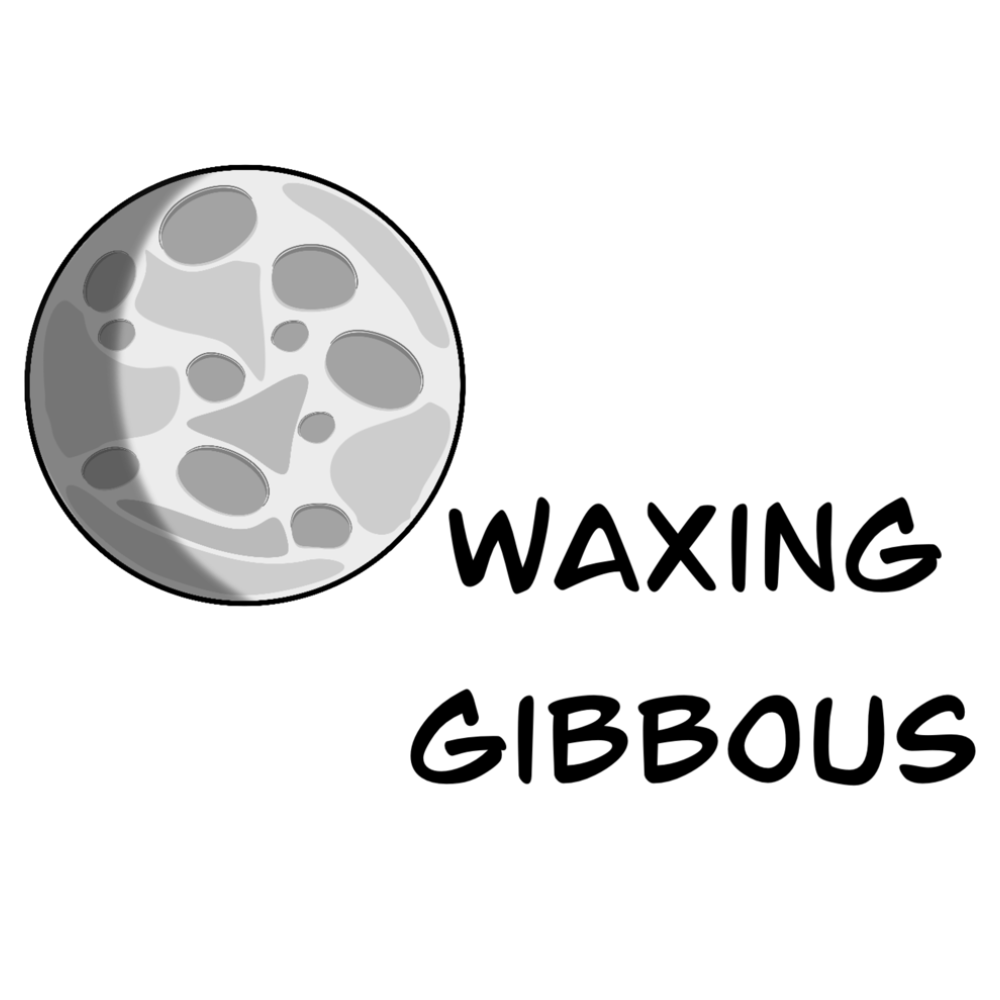
Illustration of the moon in waxing gibbous

Phase four is the waxing gibbous.

Illustration of the full moon

Phase five is the full moon. The full moon is now on the opposite side of Earth.

Illustration of the moon in waning gibbous

Phase six is waning gibbous.

Illustration of the moon in third quarter

Phase seven is the last quarter.

Illustration of the moon in waning crescent

Phase eight is the waning crescent.

Eclipse

There are 2 types of eclipse, a luna eclipse and solar eclipse.
A luna eclipse is when the Earth blocks the light from getting to the moon by being in between the Sun and Moon.
A solar eclipse is when the moon is in between the Sun and Earth.

The next total eclipse will be on the 23rd September 2090.

Illustration of a solar and lunar eclipse

Gravity is the same as weight. The unit for weight is the Newton (N).

Mass and Weight are not the same. The units for mass is Kg.

The gravitational field strength on Earth is 10N/kg. This means for every 1kg of mass there is 10N of force applied.

How to calculate weight

Mass is the amount of matter an object has, whereas weight is the amount of force applied to that object. The gravitational pull down on this object is then measured in weight.

Every planet has its own gravitational field strength. For example, the gravitational field strength of Mars is 4N/kg.

Calculating weight

The mass of an object won't change, but its weight can. This happens when the gravitational field strength is different from what it is on earth.

Think of footage from moon landings. The astronauts' weight is different on the moon so their steps take longer to reach the surface of the moon.

We can calculate Weight using the following equation.

Weight = Mass X Gravitational field strength.

An object has a mass of 5kg. To calculate its weight on Earth we do the equation 5kg x 10N/kg = 50N. 

On Mars the same object is 5kg x 4N/kg = 20N.


illustration of the solar system

Space and the known universe

From the smallest object to the largest, there are asteroids, moons, planets, stars, solar systems, and galaxies all inside the universe.

space person fishing on a planet

The Hubble Telescope

The Hubble telescope has helped us understand that there are roughly 125 billion galaxies in the known universe.

space person sat on a moon

The Milky Way

The Milky Way is the galaxy that houses our solar system. Astronomers have discovered nearly 3200 stars with planets orbiting them in the Milky Way. 

space person kicking a planet

The planets moving in space

The planets in our solar system that are moving further away from the Sun are Mercury, Venus, Earth, Mars, Jupiter, Saturn, Uranus, and Neptune.

A way to remember this by using a mnemonic such as, My Very Eager Mother Just Served Us Nuggets.
Why is Pluto not a planet?

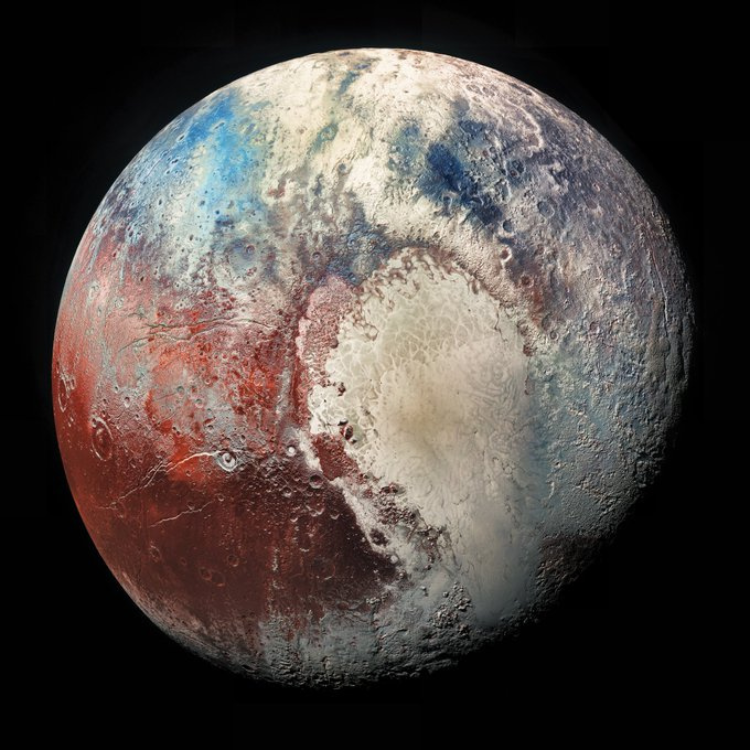
In 2006, the IAU changed the classification of Pluto to a "dwarf planet." This means it is still an important object in our solar system, but it only meets some of the criteria to be considered a planet.

Colour image of Pluto

Pluto's Size

Pluto is much smaller than all the other planets in our solar system and doesn't have enough gravity to "clear" its orbit of other debris, which is one of the criteria for being a planet.

Pluto's Orbit

Unlike the other planets in our solar system, Pluto's orbit is irregular, causing it to occasionally come closer to the sun than Neptune.This makes it different from the other planets and more similar to other icy objects in the Kuiper Belt.

Other Objects

Since the discovery of Pluto in 1930, many other similar objects have been discovered in the Kuiper Belt. If Pluto were considered a planet, then these other objects would have to be considered planets, significantly increasing the number of planets in our solar system.

What's the difference between a meteor and an asteroid?

Asteroids and meteoroids are both space rocks that are found in our solar system, but they have some differences that set them apart.

Meteor burning up in the Earth's atmosphere

Meteor & Meteorite

Meteoroids, on the other hand, are tiny rocks found in space and typically less than 10 meters in size. They can be made of rock, metal, or both.

When a meteoroid enters Earth's atmosphere, it is called a meteor. Meteors are often called "shooting stars" because as they burn up, they produce a dazzling streak of light.

Most meteors burn up before they reach the Earth's surface, but some larger ones can make it all the way down and cause damage.

Asteroid in space

Asteroid

Asteroids are large rocks that revolve around the sun.

They are usually found in the asteroid belt between Mars and Jupiter. Some asteroids can be as small as a pebble, while others can be as large as a dwarf planet.

Scientists believe that asteroids are the leftover debris from the formation of our solar system over 4 billion years ago.

They are made up of rock and metal and do not have any atmosphere or water.

Find out what is...

Magnetic North

Click on the button below!

Click Here
space person fixing a shuttle

Speed of light

A Light-year is a unit of distance, not time. A light-year is the distance light travels in one year. The speed of light is 300,000km/s.

Check out some other amazing science topics!

Banner
Banner